


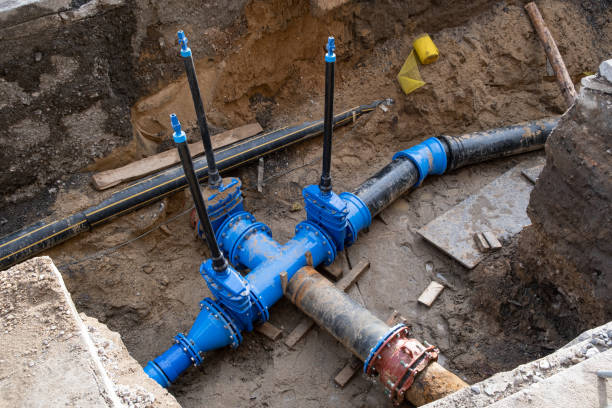
Pipeline infrastructure is one of the most valuable assets for municipalities, industrial facilities, utility companies, and private organizations. Water distribution systems, sanitary sewers, stormwater networks, industrial process pipelines, and underground utility corridors transport essential resources that support modern communities and industrial operations. However, many of these pipeline systems have been in service for decades and are now experiencing deterioration caused by corrosion, ground movement, material aging, chemical exposure, abrasion, root intrusion, and increasing operational demands.
Replacing aging underground pipelines through traditional excavation methods can be costly, time-consuming, and highly disruptive to roads, businesses, and surrounding communities. As a result, pipeline rehabilitation has become an increasingly attractive alternative for restoring structural integrity while minimizing excavation and environmental impact.
One of the most widely used trenchless rehabilitation methods is Cured-in-Place Pipe (CIPP) liner technology. CIPP involves installing a flexible resin-saturated liner inside an existing pipeline and curing it to create a new structural pipe within the original host pipe. When properly engineered, CIPP liner systems restore pipeline strength, improve hydraulic performance, reduce leakage, and significantly extend service life.
This article answers frequently asked questions about pipeline rehabilitation and CIPP liner design while highlighting the many advantages these technologies offer for aging utility networks.
What Is Pipeline Rehabilitation?
Pipeline rehabilitation is the process of restoring the structural integrity and operational performance of existing pipelines without requiring complete replacement.
Rehabilitation methods include:
- CIPP lining
- Slip lining
- Pipe bursting
- Spray lining
- Mechanical repairs
- Internal coatings
- Structural liners
The appropriate method depends on pipeline condition, material, and service requirements.
What Is CIPP Liner Design?
CIPP liner design is the engineering process used to determine the required liner thickness, material properties, structural capacity, and installation method for rehabilitating existing pipelines.
The design considers:
- Internal pressure
- External soil loads
- Groundwater pressure
- Pipe diameter
- Existing pipe condition
- Traffic loading
- Long-term performance
Proper engineering ensures the rehabilitated pipeline safely withstands future operating conditions.
Where Is CIPP Commonly Used?
CIPP technology is widely applied across many types of infrastructure.
Common applications include:
- Sanitary sewer systems
- Stormwater pipelines
- Water transmission mains
- Industrial process pipelines
- Culverts
- Drainage systems
- Utility tunnels
- Chemical pipelines
The method is suitable for both municipal and industrial projects.
Why Do Pipelines Deteriorate?
Underground pipelines are exposed to numerous conditions that gradually reduce their performance.
Common causes include:
- Corrosion
- Abrasion
- Chemical attack
- Ground movement
- Root intrusion
- Joint separation
- Aging materials
- Internal erosion
Regular inspections help identify deterioration before major failures occur.
Engineering Standards
Pipeline rehabilitation projects follow recognized engineering standards and industry guidelines.
Examples include:
- ASTM standards
- AWWA standards
- CSA standards
- Local municipal regulations
- Utility engineering specifications
Compliance helps ensure safe and reliable rehabilitation projects.
Pipeline Assessment Before Rehabilitation
Before designing a rehabilitation solution, engineers evaluate the existing pipeline.
Typical assessments include:
- Closed-circuit television inspections
- Diameter measurements
- Structural condition surveys
- Hydraulic evaluations
- Material identification
- Defect mapping
- Soil investigations
These assessments provide the information needed for an effective rehabilitation design.
Materials Used in CIPP Liners
Several materials are used depending on project requirements.
Common components include:
- Polyester resin
- Vinyl ester resin
- Epoxy resin
- Felt liners
- Fiberglass liners
- Reinforcement materials
Material selection depends on the pipeline’s operating environment.
Installation Process
CIPP installation generally involves several stages.
These include:
- Cleaning the pipeline
- Conducting inspections
- Installing the liner
- Inflating the liner
- Curing the resin
- Final inspection
- Reopening the pipeline
Proper installation is essential for long-term performance.
Structural Performance
Engineered CIPP liners restore structural strength to aging pipelines.
Design evaluations consider:
- External loading
- Buckling resistance
- Long-term creep
- Internal pressure
- Groundwater conditions
- Safety factors
Proper calculations ensure reliable operation.
Environmental Considerations
Pipeline rehabilitation often minimizes environmental impacts.
Benefits include:
- Reduced excavation
- Less construction waste
- Lower emissions
- Reduced disturbance to vegetation
- Protection of existing infrastructure
These advantages support more sustainable infrastructure management. Learn infrastructure improvement techniques through Pipeline Rehabilitation & CIPP Liner Design.
Inspection After Rehabilitation
Completed rehabilitation projects undergo quality verification.
Typical inspections include:
- CCTV inspection
- Dimensional verification
- Pressure testing
- Leak testing
- Thickness verification
Inspection confirms successful installation.
Frequently Asked Questions
What is pipeline rehabilitation?
Pipeline rehabilitation is the process of restoring the performance and structural integrity of existing pipelines using repair or lining techniques instead of complete replacement. It extends the useful life of infrastructure while reducing construction disruption.
What is a CIPP liner?
A CIPP liner is a flexible tube saturated with resin that is inserted into an existing pipeline. After installation, the liner is cured using heat, steam, hot water, or ultraviolet light to form a new structural pipe inside the original pipeline.
Why is CIPP considered a trenchless technology?
Unlike traditional replacement methods, CIPP rehabilitation usually requires only limited access points rather than continuous excavation along the pipeline route. This minimizes disruption to roads, businesses, utilities, and nearby properties.
What types of pipelines can be rehabilitated using CIPP?
CIPP can be used for sanitary sewers, stormwater systems, industrial pipelines, culverts, drainage networks, water pipelines, and various underground utility systems, depending on engineering requirements and operating conditions.
How does CIPP improve pipeline strength?
The cured liner forms a continuous structural pipe inside the existing pipeline. It helps restore load-carrying capacity, improves resistance to groundwater pressure, and reduces the effects of cracks, corrosion, and joint deterioration.
How long can a properly designed CIPP liner last?
When engineered, installed, and maintained correctly, many CIPP liner systems are designed to provide several decades of reliable service while maintaining structural performance under normal operating conditions.
Does pipeline rehabilitation improve hydraulic performance?
Yes. A smooth interior liner reduces friction within the pipeline, allowing fluids to flow more efficiently. In many cases, hydraulic performance improves despite the slightly smaller internal diameter created by the liner.
Is excavation always required?
Most CIPP projects require only limited excavation at access points such as manholes or service connections. Extensive trenching is generally unnecessary, making the process faster and less disruptive than full pipeline replacement.
How is the condition of an existing pipeline evaluated?
Engineers commonly perform closed-circuit television inspections, laser measurements, condition assessments, defect mapping, and hydraulic evaluations before designing the rehabilitation solution.
What factors influence CIPP liner design?
Design considerations include pipe diameter, depth of burial, groundwater level, soil loading, traffic loads, internal pressure, existing pipe condition, material properties, and long-term structural requirements.
Can CIPP rehabilitation reduce maintenance requirements?
Yes. A properly installed liner seals cracks, eliminates many joint-related problems, reduces infiltration, and creates a smoother interior surface that requires less ongoing maintenance than severely deteriorated pipelines.
Is CIPP suitable for industrial applications?
Yes. Industrial facilities use CIPP technology to rehabilitate process pipelines, wastewater systems, cooling water lines, and other underground piping networks where minimizing operational disruption is important.
How does CIPP support environmental protection?
By reducing excavation, preserving existing landscapes, lowering construction waste, and minimizing traffic disruption, CIPP rehabilitation offers environmental advantages compared with complete pipeline replacement.
Why is professional engineering important for CIPP projects?
Engineering ensures that the liner is properly designed for expected loads and operating conditions. Accurate structural calculations, material selection, and installation planning contribute to safe, durable, and code-compliant rehabilitation.
Best Practices for Successful Pipeline Rehabilitation
Professional engineering teams typically follow several important practices.
These include:
- Perform comprehensive pipeline inspections before design.
- Select rehabilitation methods based on actual pipeline conditions.
- Use accurate structural calculations for liner thickness.
- Verify material compatibility with transported fluids.
- Coordinate rehabilitation with utility owners and stakeholders.
- Follow recognized engineering standards and specifications.
- Conduct quality assurance during installation.
- Perform post-installation inspections and testing.
- Maintain detailed engineering documentation.
- Schedule regular inspections throughout the pipeline’s service life.
Benefits of Pipeline Rehabilitation and CIPP Liner Design
Professionally engineered rehabilitation projects provide numerous long-term advantages.
These benefits include:
- Extended pipeline service life
- Reduced construction disruption
- Lower rehabilitation costs compared with full replacement
- Improved structural integrity
- Better hydraulic performance
- Reduced leakage and infiltration
- Increased corrosion resistance
- Lower maintenance requirements
- Faster project completion
- Improved public safety
- Reduced environmental impact
- Better asset management
- Greater operational reliability
- Improved regulatory compliance
- Long-term infrastructure sustainability
Future Trends in Pipeline Rehabilitation
Pipeline rehabilitation technology continues to evolve through engineering innovation.
Emerging developments include:
- Digital twin technology for underground infrastructure
- Artificial intelligence-assisted condition assessment
- Robotics for internal pipeline inspections
- Advanced composite liner materials
- Smart sensors for continuous pipeline monitoring
- Machine learning for predictive maintenance
- Cloud-based asset management systems
- Three-dimensional pipeline modeling
- Automated defect recognition
- Sustainable low-emission rehabilitation technologies
These advancements improve the accuracy of engineering decisions while supporting longer-lasting and more efficient utility networks.
Conclusion
Pipeline rehabilitation and CIPP liner design have become essential solutions for extending the life of aging utility networks while reducing costs, minimizing disruption, and improving long-term reliability. Through careful engineering, detailed pipeline assessments, accurate structural design, and high-quality installation practices, CIPP technology restores the integrity of deteriorated pipelines without the need for extensive excavation. The result is improved hydraulic performance, enhanced structural strength, reduced maintenance requirements, and greater environmental sustainability. As municipalities, industries, and utility operators continue to modernize aging infrastructure, professionally engineered pipeline rehabilitation and CIPP liner design will remain key strategies for maintaining safe, efficient, and resilient underground utility systems for future generations.
